The Making Process
From timber
to instrument
Building a violin is a slow negotiation with material. The process below follows a single instrument from the first selection of wood to the moment it is strung up and played for the first time.
The Wood
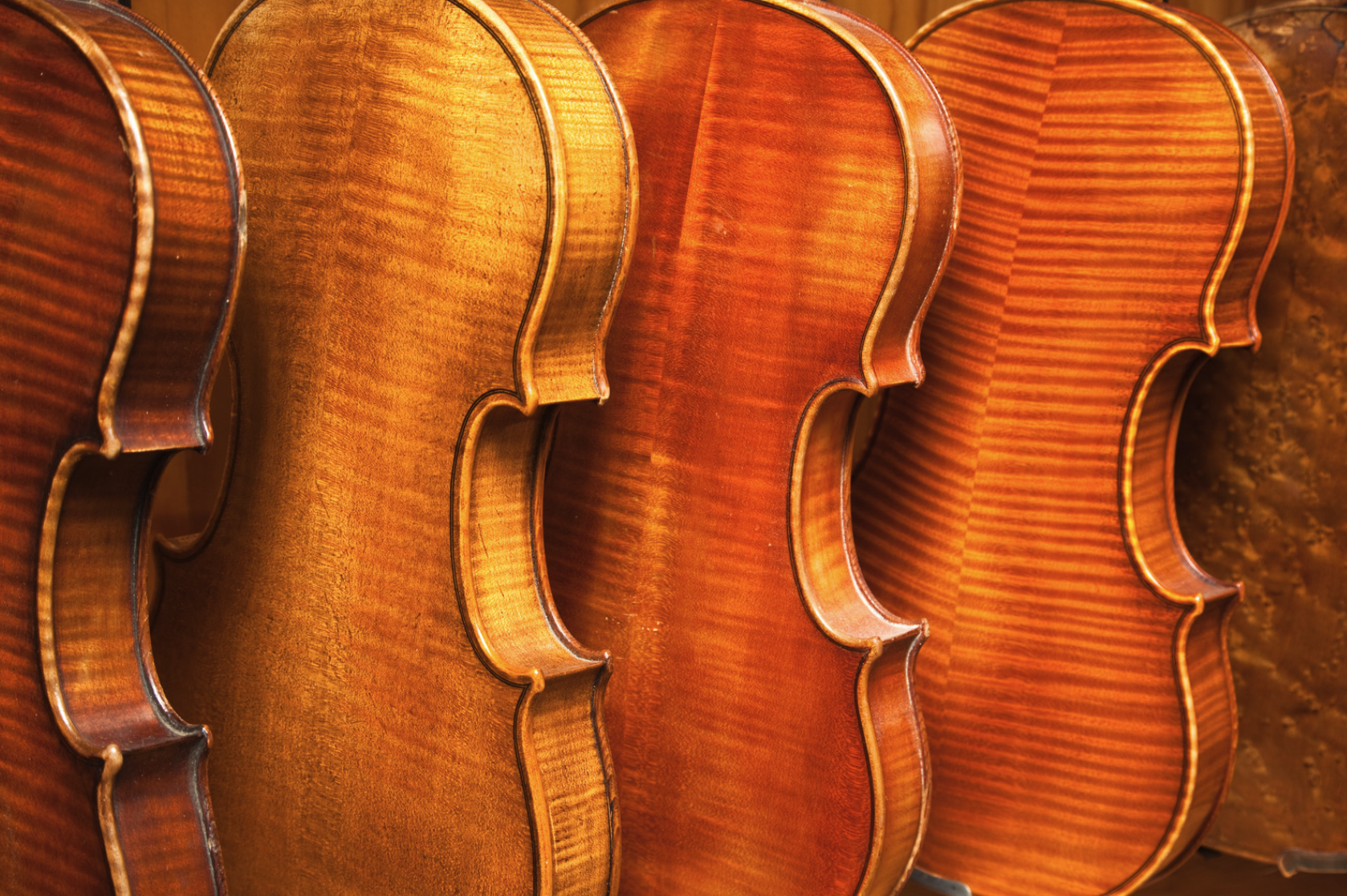
Every instrument from this atelier begins years before the first cut — in the selection and seasoning of timber. The spruce and maple that make up a violin's body must be aged long enough to have fully expelled their moisture and stabilised. A plate that is rushed into use will shift and move after the instrument is assembled, pulling the geometry away from what was intended. Wood that has rested five, eight, twelve years stays where you put it.
Spruce for the top is chosen by tap tone: the plate is held loosely at its nodal points and struck, and the tone that comes back tells you about stiffness, density, and internal damping. The right top sings. Maple for the back is chosen for its density and figure. The figure — the tight, wavy curl that catches light in a finished instrument — is not decorative. It is a sign of interlocked grain that resists splitting under tension.
I source from small European suppliers and reject more than I keep. There is no correcting for bad wood later.
The Arch
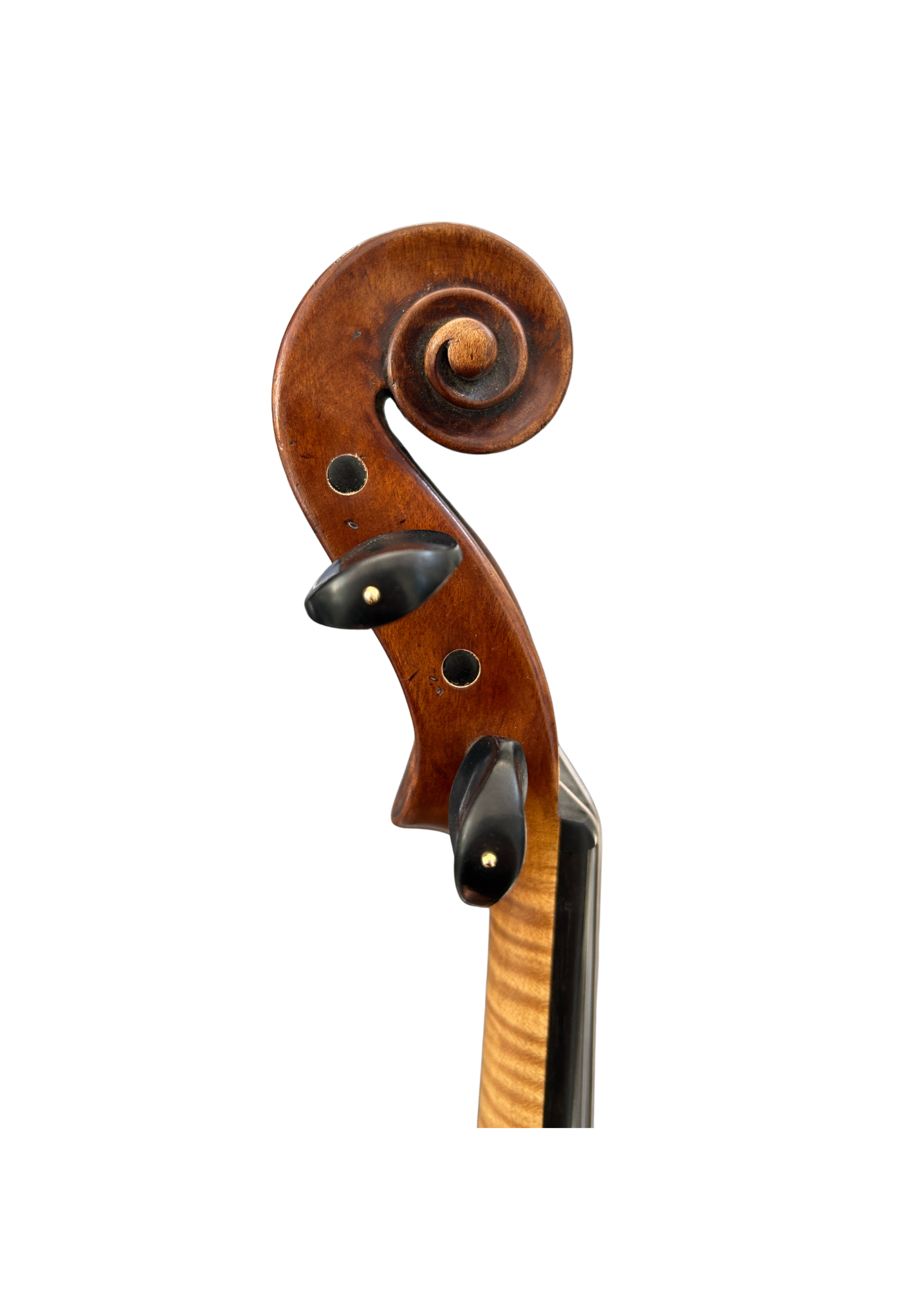
The thing that separates the violin family from all other instruments is the arch. The top and back of a violin are not flat — they rise in a shallow dome, carved entirely by hand, that gives the instrument its voice and its structural integrity. The archings are not arbitrary: their height, curvature, and transition into the edge channel are what determine how the plate flexes, and how it transmits the vibration of the strings through the bridge.
Every plate is carved individually, starting from a planed slab and working with gouges until the outside arch is complete. The plate is then hollowed from the inside — first to rough thickness, then graduated by hand with a finger plane and scraper until the thickness at each point matches the density and stiffness of that particular piece of wood. No two plates graduate identically, because no two pieces of wood are the same.
The scroll is carved last. It is structurally irrelevant and entirely a test of the maker's patience and control. Its quality signals everything about the quality of the rest of the work.
The Colour
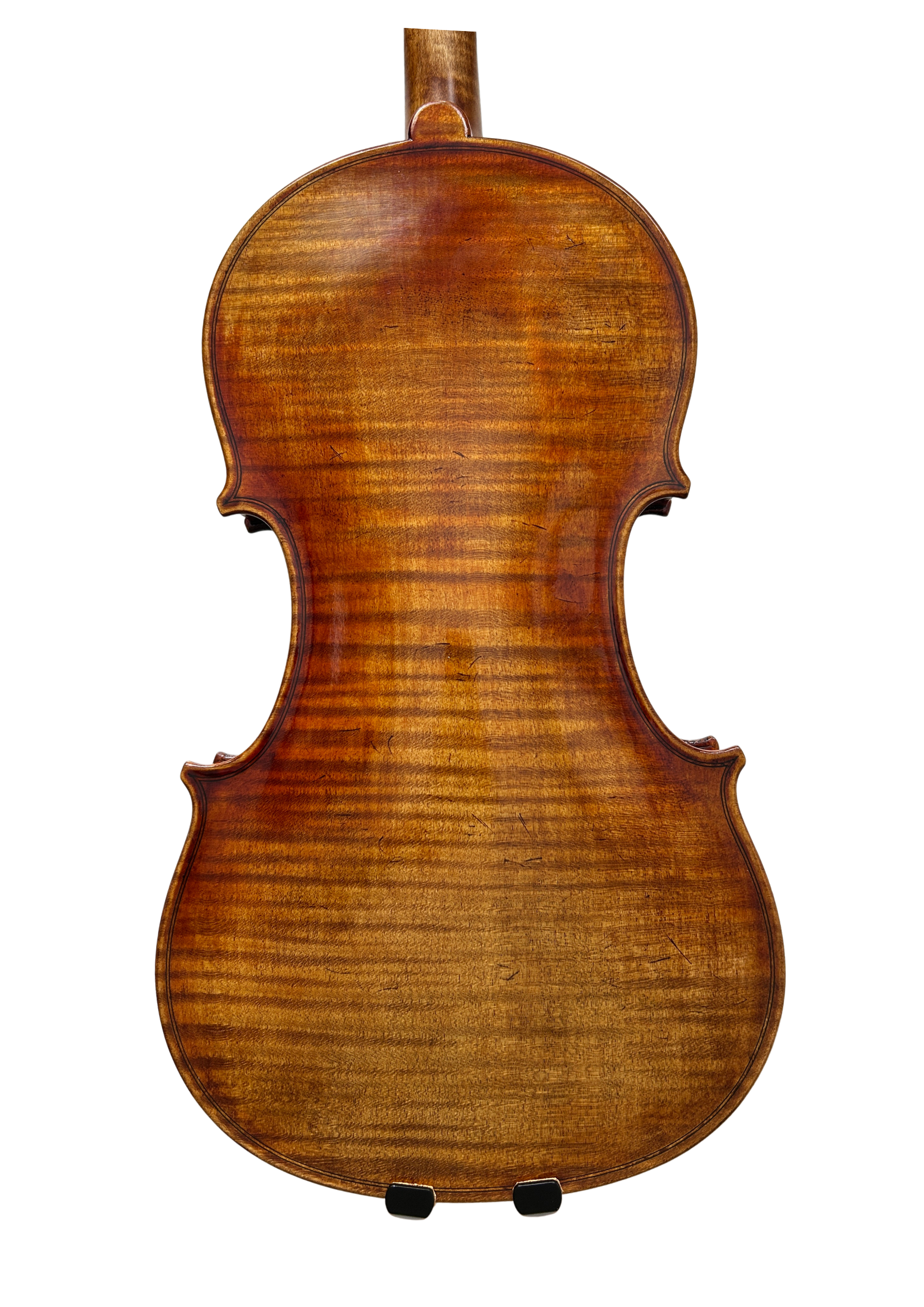
The varnish on a violin is not a cosmetic — it is part of the acoustic system. A varnish that is too thick and hard damps the vibration of the wood. A varnish that is too soft or too thin fails to protect. The Cremonese makers of the seventeenth and eighteenth centuries understood this. The quality of varnish on a Stradivari or Guarneri is inseparable from the quality of its sound.
I use an oil varnish based on recipes reconstructed from analysis of historic instruments: a ground of mineral particles applied directly to the bare wood, followed by successive coats of amber-toned resin dissolved in linseed oil. Each coat is allowed to cure fully before the next is applied. A complete varnish job takes three to four months.
The colour is never uniform. It pools in the channel around the edges, thins on the high points of the arch. Over decades, it wears in the places hands touch it. This is not a flaw. It is the instrument becoming itself.
The Voice
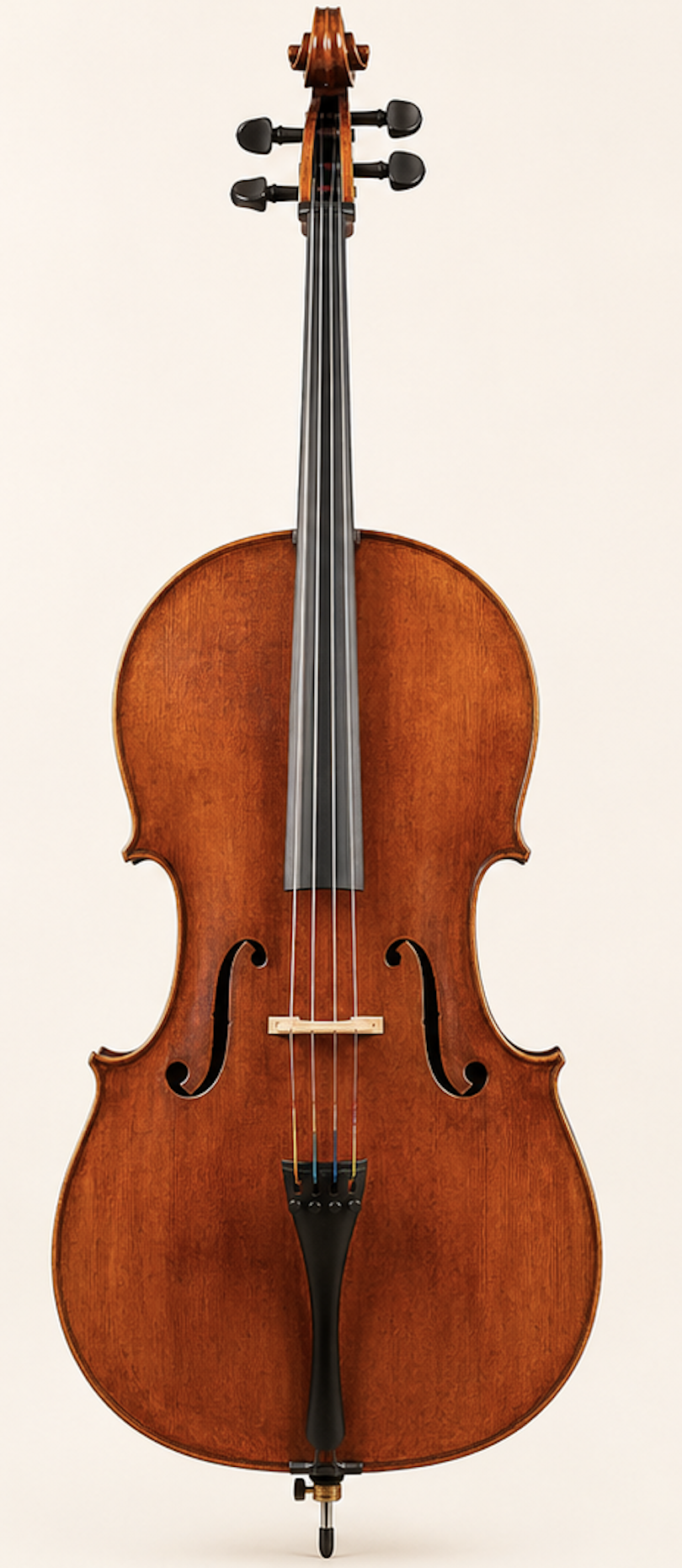
An instrument is not finished when the varnish is cured. The interior fittings — the bass bar, which runs under the treble foot of the bridge, and the soundpost, which stands under the bass foot — are critical to the final sound and require careful fitting and placement.
The bass bar is glued to the inside of the top before closing; its length and taper are fitted to that individual top. The soundpost is set after the instrument is strung up, using a long-handled setter through the f-hole. Its exact position — within a millimetre either way — changes the tone character noticeably. Too far back: the treble opens but the bass weakens. Too far forward: the instrument tightens and loses sustain.
After the first strings have settled, final adjustments are made. The nut and saddle heights are set precisely. The bridge is adjusted for string height and curve. Then the instrument is played. Usually at this point it needs nothing more. Occasionally it needs everything. The process is not finished until the instrument plays at its best.
A note on time
A single instrument takes between six months and a year to complete. Commissions are accepted on a limited basis. Enquiries are welcome at any stage of your search.